Right, plug-n-chug. Here’s a list of the devices supported by direct menu pick:
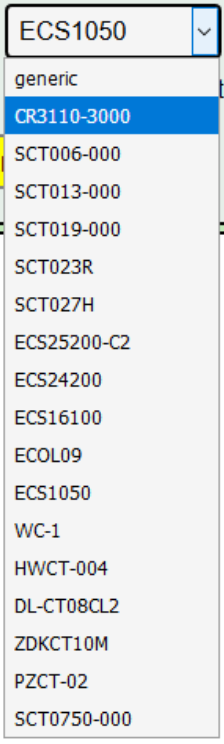
Beyond that, you can specify the “turns” ratio and phase-lead of any other generic CT.
Same for a number of VTs.
This gets into some gray areas. Most modern US services are 200A, which use two 200A breakers, one for each side of the split phase. In theory, the box will handle 200A on each side. 240V loads add to the total of both sides. 120V loads only add to the total for the side they are on.
Some older US homes have 100A panels. It’s the same as above only the limit is 100 per side.
All that said, Bill Thompson on the OEM forum has a good explanation of the practical limits of residential services based on the capacity of the utility transformers used to supply them. In addition, there are box loading formulas in the code that electricians use to prevent running the panels near or at capacity.
The SCT019 CTs are rated at 200A. They have a ratio of 6000:1 which means they would be at full scale at 250A when used with an IoTaWatt. That’s what I have had in my main panel for more than a year and my accuracy is better than .5% when compared to the meter.
The ECS24-200 (and ECS25200-C2) are 4000:1 ratio. They are full scale in IoTaWatt at 167A. By all accounts that’s more than enough and in the unlikely event the current were to exceed that, the grace leeway would get you to 175, and the protection diodes on the input would prevent any damage after that.
Here’s are my two mains in early April with the heatpump running on a cold day. I prrposely drilled down to 10s intervals so that IoTaWatt’s averaging would not hide the peaks:
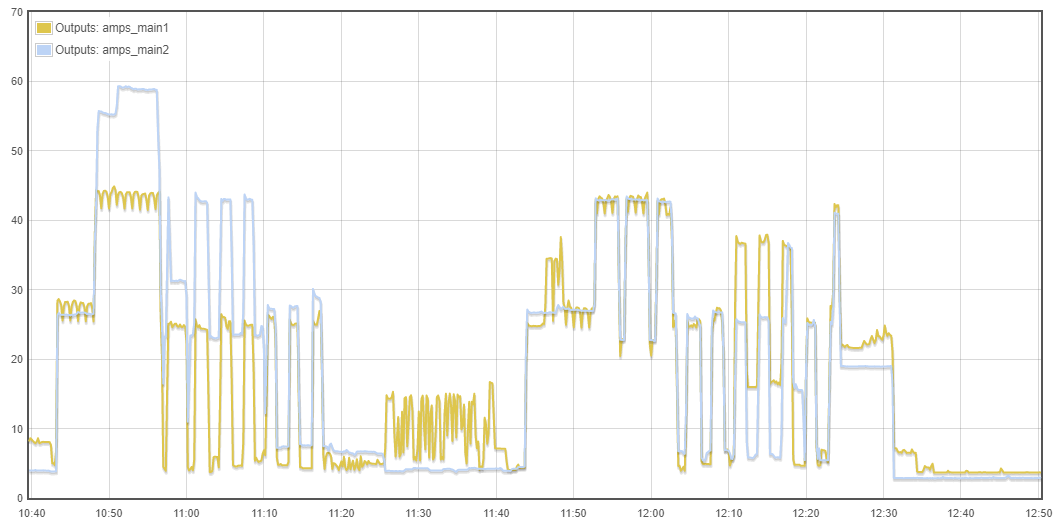
There’s a lot you can do with the graph visualization tool once you get some representative historical data.